
What Is Cookware?
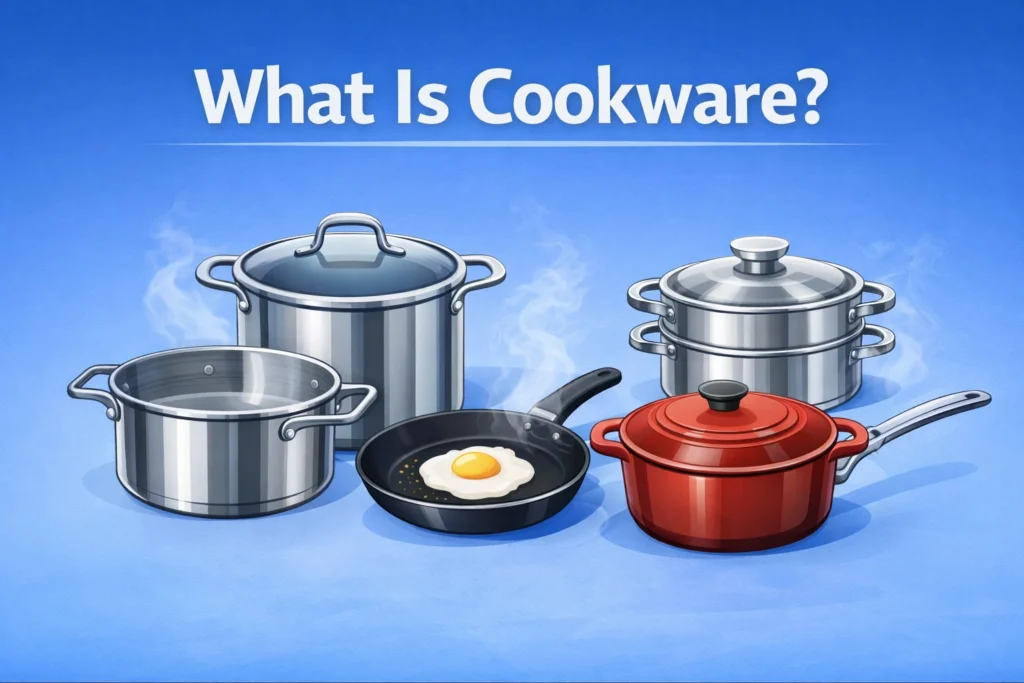
Cookware refers to the pots and pans used to prepare food over direct heat, usually on a stovetop. Common examples include frying pans, saucepans, stock pots, woks, and Dutch ovens.
Cookware is different from bakeware, which is mainly used in the oven, and from kitchen utensils like spatulas or spoons that assist with handling food rather than cooking it.
In daily cooking, cookware plays a central role. The right piece can improve heat control, texture, and flavor, while the wrong one may lead to uneven cooking or sticking.
Main Types of Cookware
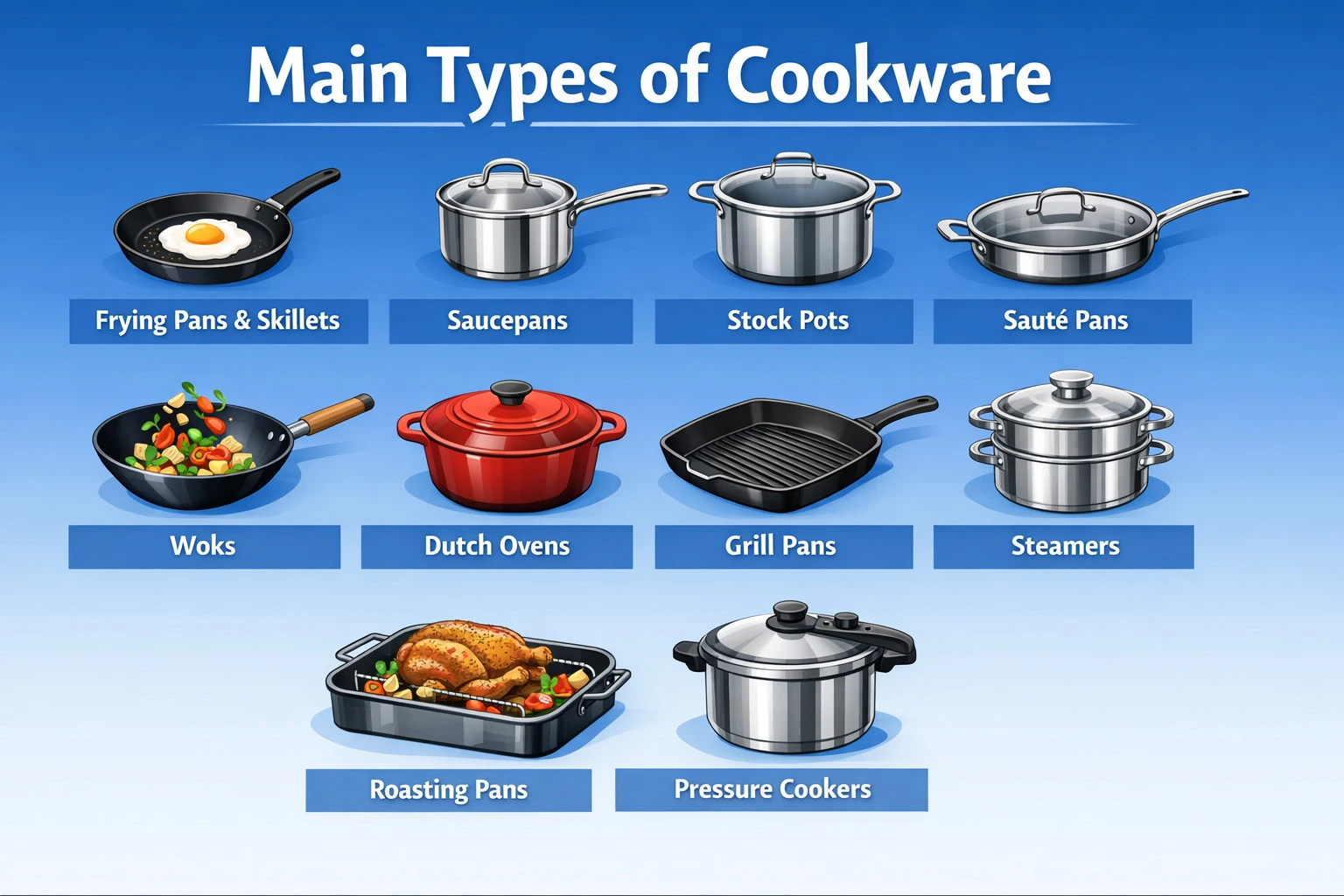
Different cookware pieces serve different cooking purposes. Wide, shallow pans help with browning and evaporation, while deeper pots are better for boiling and simmering. Choosing the right shape improves heat control and efficiency.
Frying Pans & Skillets
Frying pans (also called skillets) are one of the most essential pieces of cookware. They have low, sloped sides that make flipping and stirring easy.
Best for:
- Frying eggs
- Searing meat
- Cooking pancakes
- Sautéing vegetables
- Making quick one-pan meals
Common sizes range from 8 to 12 inches.
An 8-inch pan works well for single portions, while a 10–12 inch pan suits family cooking.
Saucepans
Saucepans are deep with straight sides and usually come with a lid. They are designed to hold liquids and control evaporation.
Best for:
- Boiling pasta or grains
- Making sauces
- Heating soups
- Cooking oatmeal or rice
Common sizes range from 1 to 4 quarts.
A 2–3 quart saucepan is the most versatile for daily use.
A well-built saucepan should heat evenly and maintain steady simmering without scorching.
Stock Pots
Stock pots are large, deep pots built for cooking in volume. They have tall sides and a wide base to handle large amounts of liquid.
Best for:
- Soups and broths
- Boiling pasta
- Making stock
- Batch cooking for meal prep
Typical sizes range from 6 to 12 quarts.
If you cook for a family or prepare food in large batches, a stock pot is a practical investment.
Sauté Pans
Sauté pans look similar to frying pans but have straight, higher sides. This design increases capacity and reduces splatter.
Best for:
- Sautéing vegetables
- Cooking dishes with sauces
- Browning meat before simmering
- One-pan meals that need extra space
Because of their straight sides, sauté pans handle liquids better than skillets while still allowing browning.
Common sizes range from 3 to 5 quarts.
Woks
Woks are round-bottom or flat-bottom pans designed for high-heat cooking. Their shape allows food to move quickly between intense heat and cooler edges.
Best for:
- Stir-frying
- Quick vegetable cooking
- High-heat searing
- Steaming (with rack)
- Deep frying
Carbon steel woks are especially popular for fast heat response and durability.
If you cook Asian-style dishes often, a wok can replace several other pans.
Dutch Ovens
Dutch ovens are heavy, thick-walled pots with tight-fitting lids. They are built for slow cooking and heat retention.
Best for:
- Braising meat
- Slow-cooked stews
- Baking bread
- Oven-to-table dishes
They work on stovetops and in ovens, making them versatile for long cooking processes.
Common sizes range from 4 to 7 quarts.
Specialty Cookware
Specialty cookware includes tools designed for specific cooking methods. These are not essential for every kitchen but can improve certain tasks.
Examples include:
- Grill pans (indoor grilling)
- Steamers (gentle cooking for vegetables and dumplings)
- Roasting pans (oven roasting for meats)
- Pressure cookers (fast cooking under pressure)
Choose specialty pieces based on your cooking habits rather than trends.
Cookware Materials Explained
Material affects how cookware heats, retains temperature, reacts with food, and how long it lasts. Some materials respond quickly to heat changes, while others retain heat for longer cooking.
Cookware Material Comparison Overview
The table below summarizes key differences at a glance before diving into detailed explanations.
| Material | Heat Retention | Maintenance Level | Average Lifespan | Best For |
|---|---|---|---|---|
| Stainless Steel | Medium | Low | 10–20+ years | Browning, sauces, everyday cooking |
| Nonstick (PTFE) | Low–Medium | Low (gentle care) | 2–5 years | Eggs, delicate foods |
| Ceramic Coated | Low–Medium | Low | 1–3 years | Light cooking, low-oil meals |
| Cast Iron | Very High | Medium–High (seasoning) | 20+ years | Searing, baking, slow cooking |
| Carbon Steel | High | Medium (seasoning) | 10–20+ years | Stir-frying, high heat |
| Hard-Anodized Aluminum | Medium | Low–Medium | 5–10 years | Balanced everyday cooking |
Stainless Steel
Stainless steel is widely used in cookware because of its durability and resistance to corrosion. Most high-quality stainless steel pans have an aluminum or copper core to improve heat conduction.
Heat Performance
- Heats moderately fast (with bonded core)
- Excellent for browning and searing
- Good temperature control
Durability
- Very durable
- Resistant to rust and corrosion
- Can last many years with proper care
Maintenance
- Dishwasher safe (in most cases)
- May require soaking for stuck food
- Does not require seasoning
Safety Notes
- Non-reactive with most foods
- Safe for high-heat cooking
Ideal For
- Home cooks who want versatility
- Searing meat and building sauces
- Long-term investment cookware
Nonstick (PTFE-Based)
PTFE-based nonstick cookware is designed to reduce sticking and minimize oil use.
Heat Performance
- Heats quickly
- Best for low to medium heat
- Not ideal for high-heat searing
Durability
- Coating can wear over time
- Typical lifespan: 2–5 years depending on care
Maintenance
- Easy to clean
- Avoid metal utensils
- Avoid overheating
Safety Notes
- Modern PTFE cookware is PFOA-free
- Safe when used within recommended temperatures
- Overheating can damage coating
Ideal For
- Cooking eggs and delicate foods
- Low-oil cooking
- Beginners who want easy cleanup
Nonstick pans are convenient, but they are not designed for heavy-duty or high-heat cooking.
Ceramic Coated
Ceramic-coated cookware uses a mineral-based coating instead of traditional PTFE.
Heat Performance
- Heats quickly
- Smooth cooking surface
- Performance may decline over time
Durability
- Coating can wear or lose slickness
- Typically shorter lifespan than stainless steel
Maintenance
- Easy to clean
- Avoid abrasive scrubbing
Safety Notes
- PTFE-free
- Generally considered safe when used properly
Ideal For
- Users seeking non-PTFE alternatives
- Light to moderate cooking tasks
Ceramic cookware offers easy food release, but durability depends heavily on quality and care.
Cast Iron
Cast iron is known for exceptional heat retention and durability.
Heat Performance
- Heats slowly
- Retains heat extremely well
- Excellent for high-heat searing
Durability
- Can last decades or even generations
- Extremely sturdy
Maintenance
- Requires seasoning
- Should be dried thoroughly to prevent rust
- Not ideal for soaking
Safety Notes
- Naturally nonstick when well-seasoned
- May slightly increase iron content in food
Ideal For
- Searing steaks
- Baking cornbread
- Slow cooking and oven use
Carbon Steel
Carbon steel combines some benefits of cast iron and stainless steel.
Heat Performance
- Heats faster than cast iron
- Excellent for high-heat cooking
- Responsive to temperature changes
Durability
- Very durable
- Develops seasoning over time
Maintenance
- Requires seasoning
- Should be dried after washing
- Can rust if not maintained
Safety Notes
- Naturally nonstick once seasoned
- Safe for high temperatures
Ideal For
- Stir-frying
- Searing
- Wok cooking
- Cooks who prefer lighter weight than cast iron
Carbon steel is commonly used in professional kitchens for its balance between heat responsiveness and durability.
Hard-Anodized Aluminum
Hard-anodized aluminum is treated to strengthen the surface and improve durability.
Heat Performance
- Heats quickly and evenly
- Good temperature control
Durability
- More scratch-resistant than regular aluminum
- Stronger surface structure
Maintenance
- Usually easy to clean
- Often paired with nonstick coating
Safety Notes
- Anodized surface prevents direct aluminum contact
- Generally safe when coating is intact
Ideal For
- Everyday cooking
- Balanced performance and lighter weight
- Mid-range cookware buyers
Hard-anodized aluminum offers a balance between performance, weight, and price.
Cookware Sets vs Individual Pieces
One of the most common buying questions is:
Should you buy a cookware set or build your collection piece by piece?
The answer depends on your cooking habits, kitchen space, and long-term goals. A set can be convenient and cost-effective. Individual pieces can be more flexible and performance-focused.
Pros and Cons of Cookware Sets
Cookware sets usually include 6–15 matching pieces, such as frying pans, saucepans, and a stock pot. They are often marketed as a complete kitchen solution.
Advantages of Cookware Sets
- Cost efficiency: Buying a set is usually cheaper per piece than buying items individually.
- Matching design and materials: All pieces share the same material, construction, and appearance, creating a consistent cooking experience.
- Convenience: For a new home or apartment, a set provides most essentials in one purchase.
Disadvantages of Cookware Sets
- You may not use every piece: Many sets include small saucepans or specialty lids that rarely get used.
- Material limitations: All pieces are typically made from the same material. But different cooking tasks often benefit from different materials.
- Storage space: Large sets take up more cabinet space, especially in small kitchens.
Cookware sets make sense if you’re starting from scratch and want simplicity. But they are not always the most efficient long-term strategy.
When to Buy Individual Pieces
Buying cookware individually gives you more control over performance and budget.
This approach works well if:
- You already own some cookware
- You cook specific dishes often
- You want different materials for different tasks
- You prefer upgrading slowly over time
For example, you might choose:
- A stainless steel pan for searing
- A nonstick skillet for eggs
- A cast iron pan for high-heat cooking
Instead of buying 10 matching pieces, you focus only on what you actually use.
This method often leads to a more practical, performance-driven kitchen.
Starter Kitchen Recommendation
If you’re setting up a basic kitchen, you do not need a large cookware set.
A simple, functional starter collection can include:
- 10–12 inch frying pan
- 2–3 quart saucepan with lid
- 6–8 quart stock pot
- Optional: Dutch oven or sauté pan
With just these pieces, you can cook most everyday meals.
As your cooking style develops, you can add specialty items based on real needs—not impulse buying.
How to Choose the Right Cookware
Choosing cookware is not about buying the most expensive set. It is about matching the right tools to how you actually cook.
The best cookware for one person may not work well for another. Your cooking style, stove type, budget, and kitchen space all matter.
Based on Cooking Style
Start with how you cook most often.
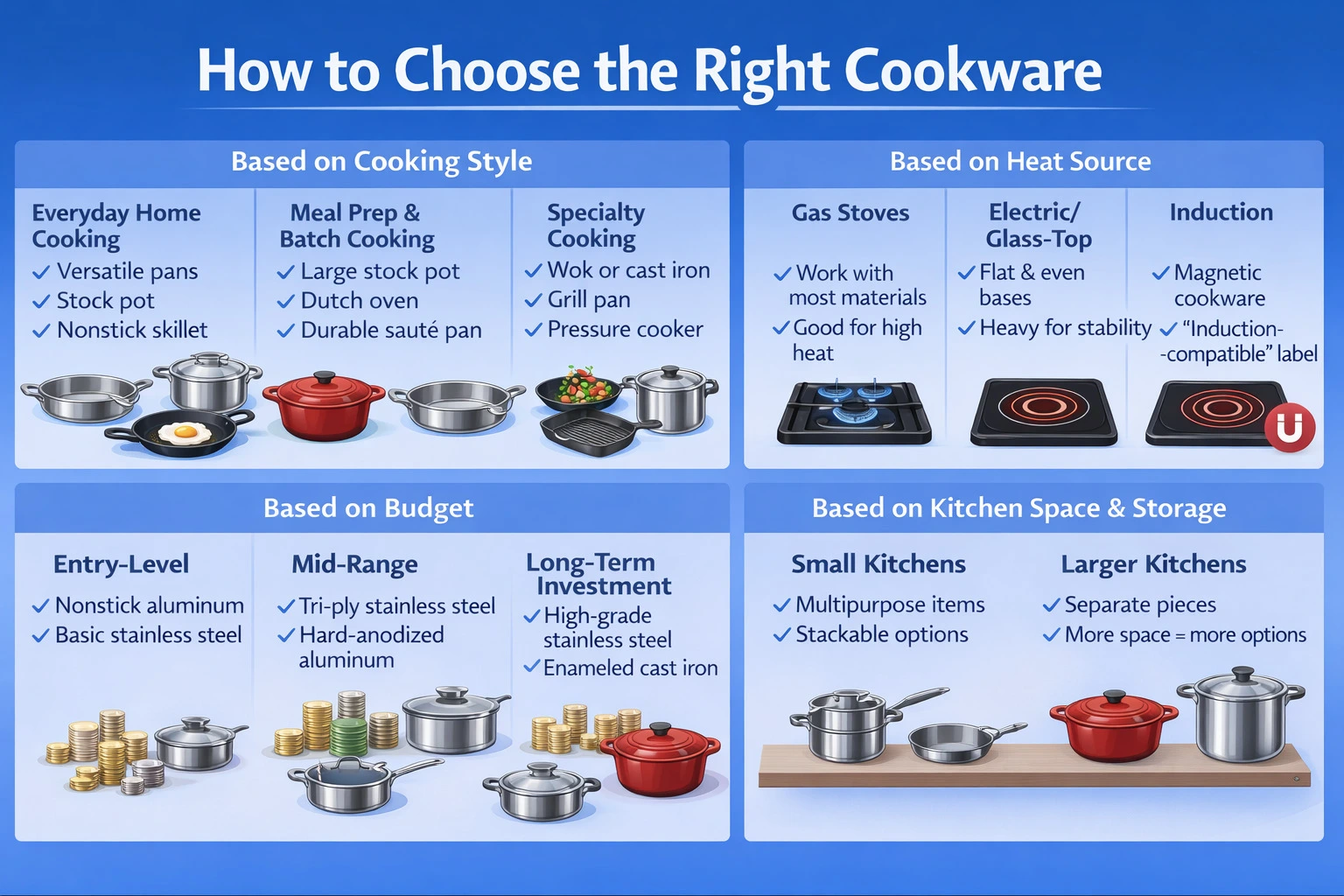
Everyday Home Cooking
If you cook simple meals like eggs, pasta, stir-fries, and chicken:
- Stainless steel frying pan
- Nonstick skillet for delicate foods
- Medium saucepan
- Stock pot for soups or pasta
Versatility and easy cleaning should be your priority.
Meal Prep & Batch Cooking
If you cook in large quantities:
- Large stock pot (8–12 qt)
- Large sauté pan
- Dutch oven
Capacity and durability matter more than lightweight design.
Specialty Cooking
If you focus on certain cuisines or techniques:
- Wok for high-heat stir-frying
- Cast iron for searing and baking
- Grill pan for indoor grilling
- Pressure cooker for fast cooking
Choose tools that match your cooking methods instead of buying general-purpose pieces you rarely use.
Based on Heat Source
Not all cookware works on every stove.
Gas Stoves
- Work with most materials
- Good for high-heat cooking
- Flame control allows flexible heat adjustment
Nearly all cookware types are compatible.
Electric Coil or Glass-Top Stoves
- Flat-bottom cookware performs best
- Avoid warped or uneven bases
- Heavy pans provide better stability
Look for smooth, flat construction.
Induction Cooktops
- Require magnetic materials
- Stainless steel (magnetic grades), cast iron, and carbon steel usually work
- Aluminum and copper need a magnetic base layer
Always check for “induction-compatible” labeling before buying.
Matching cookware to your stove ensures efficient heating and energy use.
Based on Budget
Cookware pricing varies widely, but higher price does not always mean better results.
Entry-Level
- Nonstick aluminum
- Basic stainless steel
- Suitable for beginners
Good for light to moderate use, but may wear faster.
Mid-Range
- Tri-ply stainless steel
- Hard-anodized aluminum
- Better heat distribution and durability
A practical balance between performance and cost.
Long-Term Investment
- High-quality stainless steel
- Enameled cast iron
- Professional-grade carbon steel
Built for long-term durability and consistent results.
If you cook often, investing in durable core pieces usually saves money over time.
Based on Kitchen Size & Storage
Kitchen space is often overlooked when choosing cookware.
Small Kitchens
- Prioritize multipurpose pieces
- Choose stackable designs
- Avoid oversized sets
- Consider a sauté pan instead of multiple pans
A few versatile items are better than a crowded cabinet.
Larger Kitchens
- Room for specialty cookware
- Separate pieces for different tasks
- Easier organization
Space allows flexibility, but smart selection still matters.
Quick Decision Summary
If you are unsure where to start:
- Identify your most common meals.
- Confirm stove compatibility.
- Set a realistic budget.
- Choose versatile core pieces first.
The right cookware should support how you cook—not complicate it.
Common Beginner Mistakes
- Buying large sets without knowing what you use
- Choosing nonstick for high-heat searing
- Ignoring stove compatibility
- Overlooking storage space
Cookware Safety & Health Considerations
Safety is one of the most searched topics related to cookware. Many concerns online mix facts with outdated information, so it’s important to focus on current standards and practical use.
Most modern cookware sold by reputable manufacturers meets safety regulations. The key is using each material correctly and replacing it when it shows signs of wear.
Is Nonstick Cookware Safe?
Modern nonstick cookware typically uses PTFE (polytetrafluoroethylene) as the coating material. When used properly, PTFE is considered safe for cooking.
Here are the important facts:
- PTFE coatings are safe at normal cooking temperatures.
- Most modern nonstick cookware is PFOA-free. (PFOA was phased out years ago due to health concerns.)
- Overheating an empty nonstick pan can damage the coating and release fumes.
To use nonstick cookware safely:
- Avoid heating an empty pan for long periods.
- Cook at low to medium heat.
- Avoid metal utensils that scratch the surface.
- Replace the pan if the coating peels or flakes.
Nonstick pans are ideal for eggs, pancakes, and delicate foods, but they are not designed for extreme high-heat searing.
Metal Leaching & Coating Wear
Another common concern is whether metals can leach into food.
Stainless steel is generally non-reactive and safe for most cooking.
Cast iron and carbon steel may transfer small amounts of iron, which is usually not harmful and can even be beneficial in small quantities.
Uncoated aluminum can react with acidic foods, which is why many aluminum pans are anodized or coated.
The bigger issue is surface damage.
You should consider replacing cookware when:
- Nonstick coating peels or flakes
- Surface is deeply scratched
- Pan is warped and heats unevenly
- Rust cannot be removed
- Handles become loose or unsafe
Regular inspection and proper care extend cookware lifespan and reduce risk.
Oven Safety & Temperature Limits
Not all cookware is oven-safe, even if it looks sturdy.
Always check the manufacturer’s temperature rating. Common guidelines:
- PTFE nonstick: usually safe up to 400–500°F (varies by brand)
- Stainless steel: often oven-safe at higher temperatures
- Cast iron: typically oven-safe at very high heat
- Handles (plastic or rubber) may limit oven use
Lids may also have lower heat limits, especially if they contain plastic knobs.
Ignoring temperature limits can damage coatings, weaken handles, and reduce lifespan.
Information in this section reflects current regulatory standards in the U.S. and EU regarding cookware materials and coatings.
Cookware Care & Maintenance
Good cookware can last many years—but only if you take care of it properly. Cleaning habits, heat control, and storage all affect performance and lifespan.
Cleaning Basics by Material
Stainless Steel
- Safe for regular dish soap and warm water
- Soak before scrubbing if food is stuck
- Use non-abrasive scrubbers to avoid surface scratches
- For burnt residue, simmer water in the pan before cleaning
Nonstick (PTFE-Based)
- Hand wash when possible
- Avoid metal utensils
- Do not use steel wool or abrasive cleaners
- Let the pan cool before washing to protect the coating
Ceramic Coated
- Use gentle sponges
- Avoid harsh scrubbing powders
- Clean soon after cooking to prevent buildup
Cast Iron & Carbon Steel
- Avoid long soaking
- Dry immediately after washing
- Lightly oil after cleaning to maintain seasoning
- Do not use harsh detergents regularly
Hard-Anodized Aluminum
- Mild soap and soft sponge
- Avoid high-impact cleaning tools
- Follow manufacturer instructions if coated
Proper cleaning keeps surfaces smooth and prevents long-term damage.
Avoiding Warping and Overheating
Warping happens when a pan experiences sudden temperature changes or extreme heat.
To reduce risk:
- Do not place a hot pan under cold water
- Preheat gradually instead of using maximum heat immediately
- Avoid overheating empty nonstick pans
- Match pan size to burner size
High heat does not always mean better cooking. Many dishes cook more evenly at medium heat.
Storage Tips
How you store cookware also affects its condition.
- Stack pans carefully with protective liners between them
- Avoid stacking heavy cast iron directly on nonstick surfaces
- Hang frequently used pans if space allows
- Store lids separately if stacking causes scratching
Organized storage reduces surface damage and saves cabinet space.
How to Extend Cookware Lifespan
Simple habits can significantly increase durability:
- Use the right heat level for each material
- Use silicone or wooden utensils when possible
- Avoid sudden temperature shocks
- Inspect handles and screws periodically
- Replace damaged nonstick pans rather than continuing to use them
Well-maintained stainless steel or cast iron cookware can last decades. Nonstick cookware typically has a shorter lifespan but can still perform well with proper care.
How Long Does Cookware Last?
Cookware does not last forever—but some materials can serve you for decades. Lifespan depends on material, usage frequency, heat habits, and maintenance.
Understanding realistic lifespan expectations helps you plan smarter purchases and avoid using worn-out cookware that no longer performs safely.
Lifespan by Material Type
Here is a general guideline for common cookware materials:
Nonstick (PTFE-Based)
- Average lifespan: 2–5 years
- Shorter if frequently overheated or scratched
- Coating wear is the main limiting factor
Ceramic Coated
- Average lifespan: 1–3 years
- Performance may decline as coating loses slickness
Stainless Steel (with bonded core)
- 10–20+ years
- Often lasts decades with proper care
Cast Iron
- 20+ years, often lifetime
- Can be restored through re-seasoning
Carbon Steel
- 10–20+ years
- Durable when properly seasoned and maintained
Hard-Anodized Aluminum
- 5–10 years
- Depends on coating and usage habits
These are general ranges. High heat misuse, aggressive cleaning, and improper storage can shorten lifespan significantly.
Signs of Wear
Cookware should be replaced when performance or safety is compromised.
Look for these signs:
- Peeling or flaking nonstick coating
- Deep scratches exposing base metal
- Warped base causing uneven heating
- Persistent rust that cannot be removed
- Loose or unstable handles
- Severe discoloration combined with poor heating performance
Minor cosmetic scratches on stainless steel are usually not a safety concern. Structural damage is more important than appearance.
When Replacement Makes Practical Sense
Replacement is practical when:
- Food sticks despite proper use
- Heat distribution becomes uneven
- Repair costs exceed replacement value
- Safety is uncertain due to coating damage
For nonstick cookware, replacing once the coating fails is recommended. For stainless steel, cast iron, or carbon steel, many issues can be repaired or restored.