
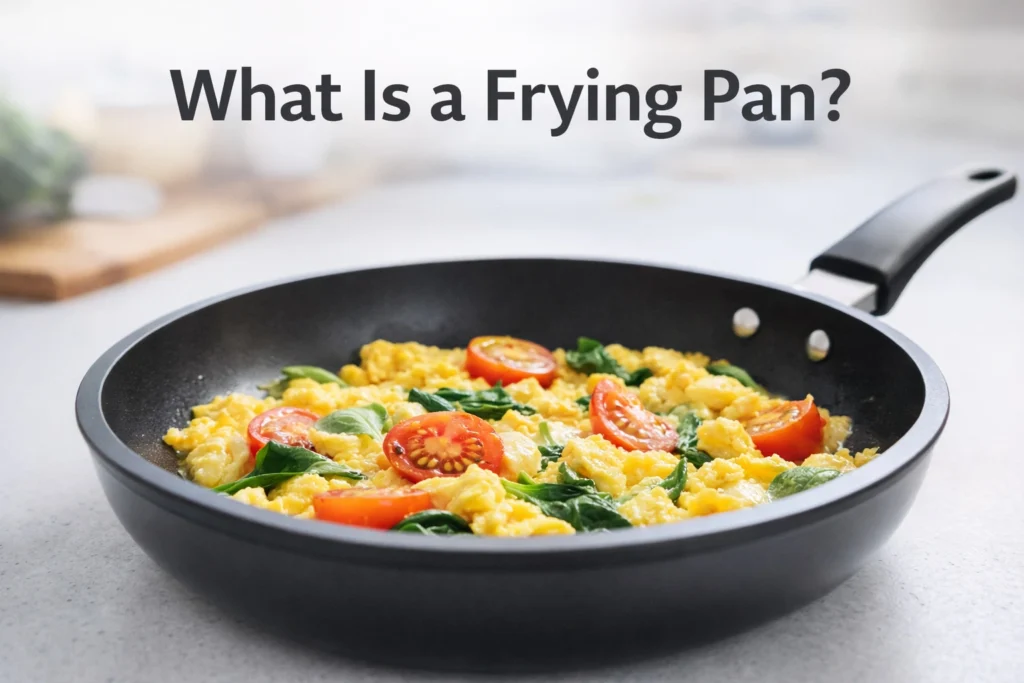
What Is a Frying Pan?
A frying pan is a flat-bottomed pan with low, slightly sloped sides, designed for cooking food quickly over direct heat on a stovetop. It is one of the most commonly used pieces of cookware in home kitchens.
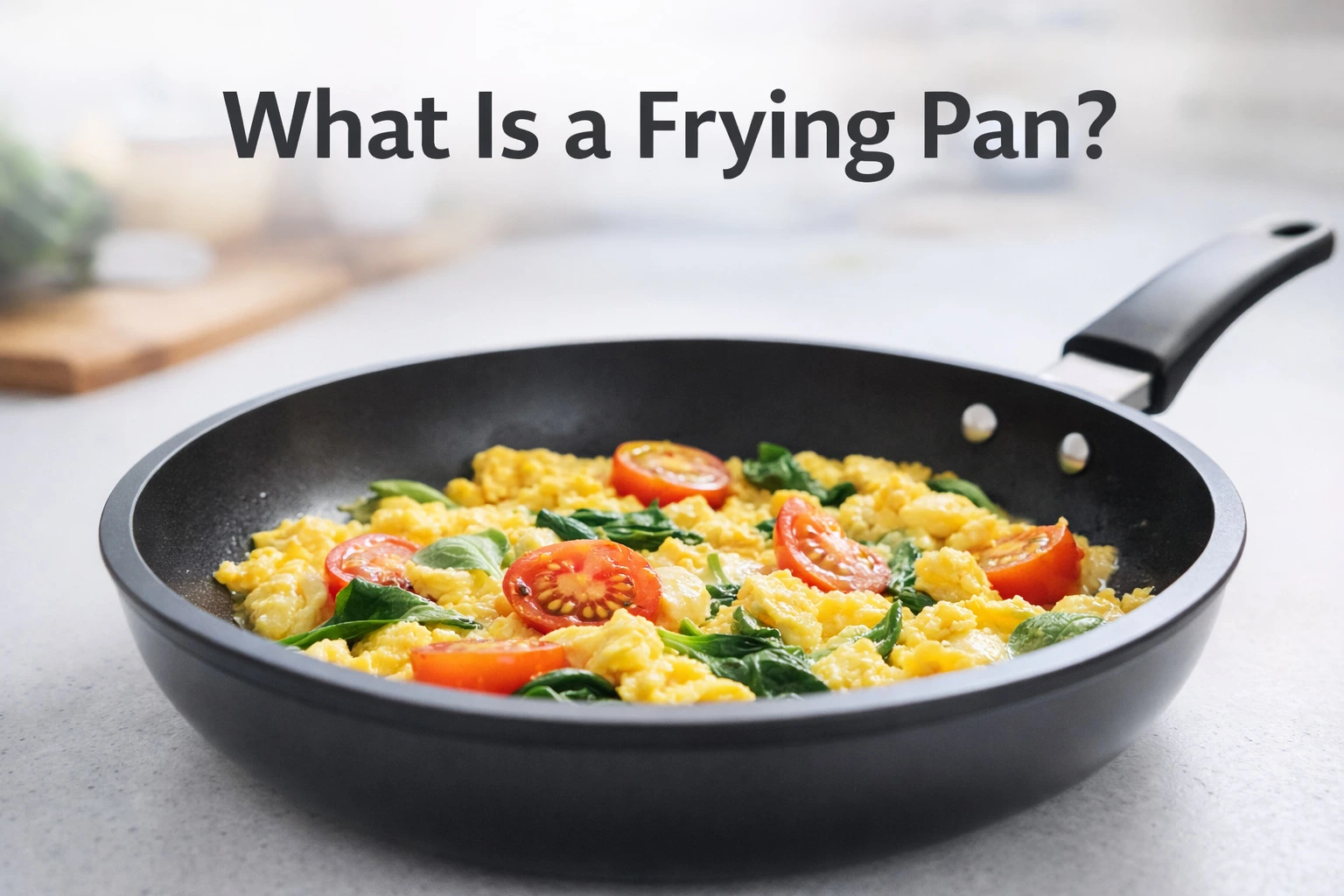
A frying pan is mainly used for:
- Frying eggs and breakfast foods
- Searing meat to develop browning
- Sautéing vegetables
- Cooking single-pan meals
- Reheating leftovers evenly
Its wide cooking surface allows moisture to evaporate quickly, which helps food brown instead of steam. The low sides make it easy to flip, stir, and turn ingredients with a spatula.
Key Design Features
A typical frying pan has:
- A flat, wide base for even contact with the heat source
- Low, angled sides for easy food movement
- A long handle for stovetop control
Unlike deeper pans such as saucepans or sauté pans, a frying pan is built for speed and surface contact rather than holding large amounts of liquid.
Frying Pan vs Skillet: Is There a Difference?
In most cases, “frying pan” and “skillet” refer to the same type of cookware. The terms are generally interchangeable in everyday cooking.
Both describe a flat-bottom pan with low sides, designed for frying, searing, and sautéing over direct heat. Recipes, cookware packaging, and retailers often use the two names without distinction.
Minor Regional Differences
In American English, “skillet” is commonly used, especially when referring to cast iron. In other regions, “frying pan” is the more widely used term.
- Cast iron skillet
- Nonstick frying pan
The difference is usually linguistic rather than functional.
Design Variations
Some manufacturers may label pans with slightly different side angles or handle styles as either skillets or frying pans. However, these variations do not significantly change how the pan is used.
In practical cooking, both terms describe the same core tool: a wide, shallow pan built for fast, direct-heat cooking.
For most home cooks, choosing between the two names is less important than choosing the right material and size.
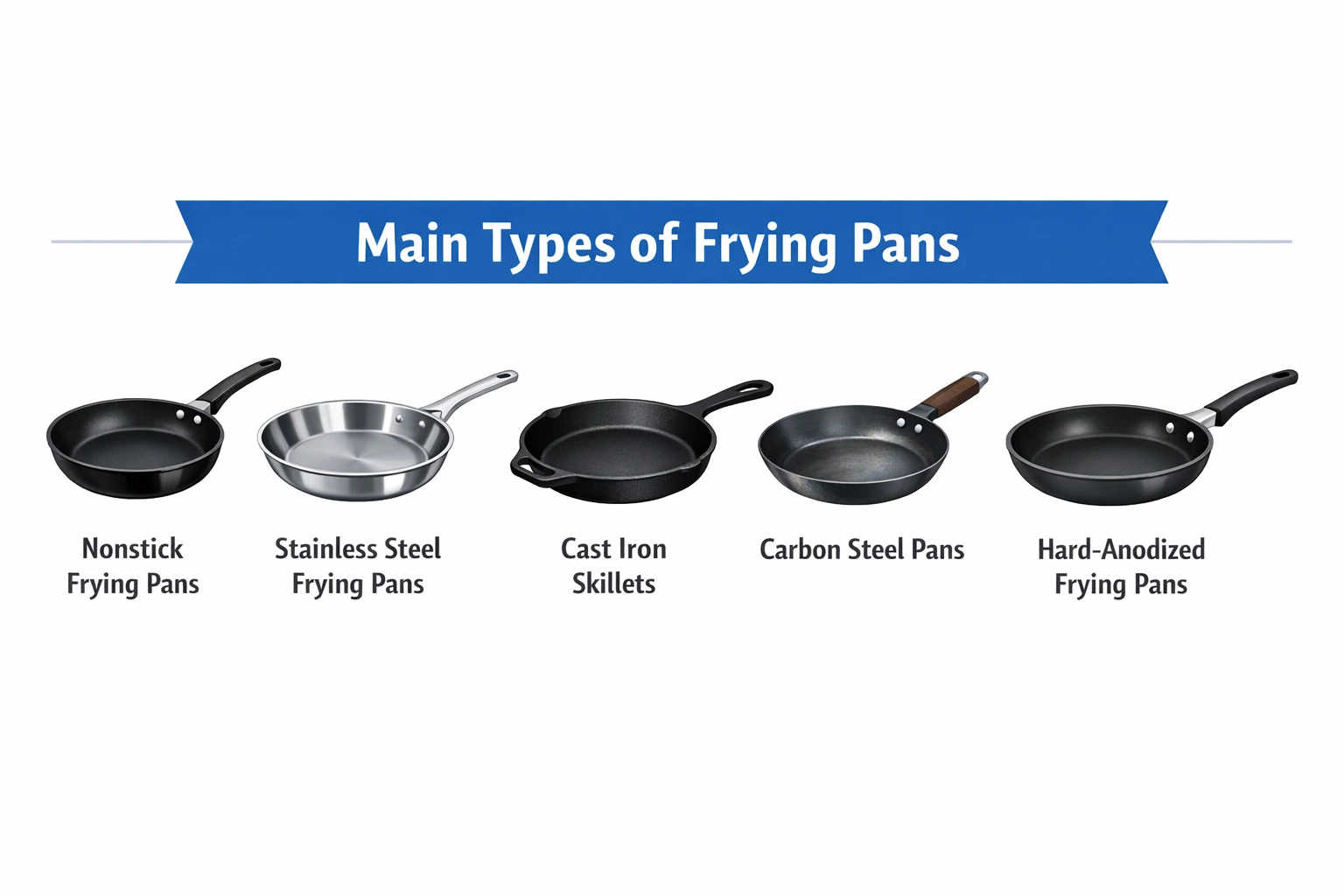
Main Types of Frying Pans
Frying pans are made from different materials, each affecting heat performance, durability, and maintenance. Choosing the right one depends on how you cook and how much upkeep you prefer.
Nonstick Frying Pans
Heat Performance: Nonstick pans heat quickly and distribute heat evenly at low to medium temperatures. They are not ideal for very high-heat searing, as excessive heat can damage the coating.
Best For:
- Eggs and omelets
- Pancakes
- Fish
- Delicate foods that stick easily
- Low-oil cooking
Durability: The nonstick coating typically lasts 2–5 years depending on use and care. Overheating or using metal utensils can shorten lifespan.
Maintenance:
- Easy to clean
- Avoid abrasive scrubbers
- Use low to medium heat
- Replace when coating peels or flakes
Nonstick pans are convenient and beginner-friendly but are not designed for heavy-duty cooking.
Stainless Steel Frying Pans
Heat Performance: High-quality stainless steel pans often contain an aluminum or copper core for better heat conduction. They handle high heat well and are excellent for browning and searing.
Best For:
- Searing meat
- Building pan sauces
- Browning vegetables
- High-heat cooking
Durability: Very durable. A well-made stainless steel pan can last 10–20 years or more with proper care.
Maintenance:
- Dishwasher-safe in many cases
- May require soaking for stuck food
- Does not require seasoning
Stainless steel offers strong performance and long lifespan but requires more technique to prevent sticking.
Cast Iron Skillets
Heat Performance: Cast iron heats slowly but retains heat extremely well. It performs well at high temperatures and maintains steady heat during cooking.
Best For:
- Searing steaks
- Baking cornbread
- Frying
- Oven cooking
Durability: Extremely durable. With proper care, cast iron can last decades or even generations.
Maintenance:
- Requires seasoning
- Must be dried thoroughly after washing
- Avoid prolonged soaking
Cast iron is heavier than other options but highly reliable for high-heat and oven use.
Carbon Steel Pans
Heat Performance: Carbon steel heats faster than cast iron and responds quickly to temperature changes. It performs well at both medium and high heat.
Best For:
- Stir-frying
- Searing
- Fast sautéing
- Professional-style cooking
Durability: Highly durable when properly maintained. It develops a natural nonstick surface through seasoning.
Maintenance:
- Requires seasoning
- Must be dried immediately after washing
- Can rust if not maintained
Carbon steel offers a balance between cast iron durability and lighter weight.
Hard-Anodized Frying Pans
Heat Performance: Hard-anodized aluminum heats quickly and evenly. It provides stable cooking performance across medium to moderately high heat.
Best For:
- Everyday cooking
- Balanced heat control
- Users who want lighter weight than cast iron
Durability: More scratch-resistant than regular aluminum. Durability varies by construction. Some hard-anodized pans are uncoated, while others use an added nonstick layer that can wear over time.
Maintenance:
- Easy to clean
- Avoid harsh scrubbing
- Follow coating care instructions if applicable
Hard-anodized pans provide a practical balance between weight, performance, and durability.
Frying Pan Materials Comparison
| Material | Heat Response | Durability | Maintenance Level | Best For |
|---|---|---|---|---|
| Nonstick | Fast, low–medium heat | Medium | Low | Eggs, delicate foods |
| Stainless Steel | Moderate, high-heat capable | High | Low | Searing, pan sauces |
| Cast Iron | Slow but very stable | Very High | Medium | High-heat cooking |
| Carbon Steel | Fast, responsive | High | Medium | Stir-frying, searing |
| Hard-Anodized | Even, steady heat | Medium–High | Low | Everyday cooking |
Frying Pan Size Guide
Frying pan size affects cooking capacity, heat control, and handling comfort. Choosing the right diameter is just as important as choosing the right material.
Most home kitchens use 8-, 10-, or 12-inch frying pans. The size refers to the top rim diameter, not the flat cooking surface, which is slightly smaller.
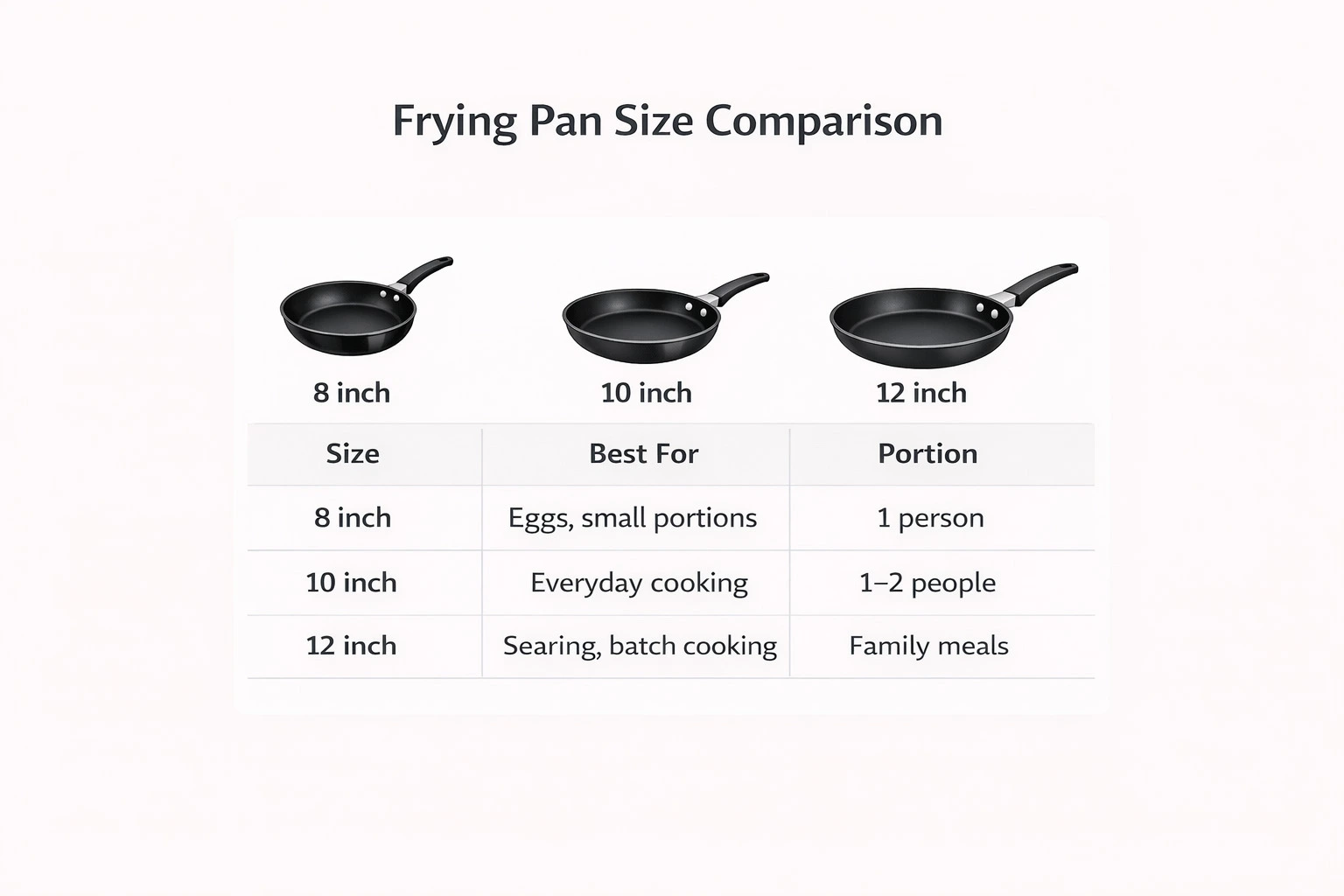
Frying Pan Size Comparison
| Size | Best For | Portion |
|---|---|---|
| 8 inch | Eggs, small portions | 1 person |
| 10 inch | Everyday cooking | 1–2 people |
| 12 inch | Searing, batch cooking | Family meals |
How to Choose the Right Size
Start with how many people you cook for most often.
- If you cook mainly for yourself, an 8-inch pan is efficient and easy to control.
- For couples or small households, a 10-inch pan offers better flexibility.
- For families or larger portions, a 12-inch pan provides more surface area for browning and batch cooking.
What Happens If the Pan Is Too Small?
A pan that is too small can:
- Overcrowd food
- Trap moisture and cause steaming instead of browning
- Require cooking in multiple batches
Overcrowding reduces heat efficiency and affects texture, especially when searing meat.
What Happens If the Pan Is Too Large?
A pan that is too large may:
- Feel heavy and harder to control
- Heat unevenly on small burners
- Take longer to preheat
- Use more storage space
Large pans are useful, but they should match your stove size and handling comfort.
Weight and Handling
As diameter increases, weight increases—especially with cast iron or stainless steel.
Before choosing a 12-inch pan, consider:
- Your wrist strength
- Whether you often lift and toss food
- Storage space in cabinets
What Frying Pan Works on Your Stove?
Not every frying pan performs the same on every stove. Before choosing material or size, make sure the pan is compatible with your heat source.
The key factors are:
- A flat, stable bottom
- Proper heat contact
- Magnetic compatibility for induction
Here’s what to check for each stove type.
Gas Stoves
Gas stoves are the most flexible heat source.
- Work with most frying pan materials
- Good for high-heat cooking
- Flame adjusts quickly
Because heat comes from an open flame, slight curvature is less of an issue. However, a stable, flat base still improves balance and heat distribution.
Electric Coil Stoves
Electric coil burners heat through direct surface contact.
- Flat-bottom pans perform best
- Avoid warped or uneven bases
- Match pan size to burner size
If the bottom is not flat, heat transfer becomes uneven, leading to hot spots.
Glass-Top (Smooth Surface) Stoves
Glass-top stoves require special attention.
- Always use a smooth, flat base
- Avoid dragging heavy pans across the surface
- Do not use warped cookware
A warped pan reduces heat efficiency and may scratch the cooktop.
Induction Cooktops
Induction stoves require magnetic cookware.
- The base must contain magnetic material
- Stainless steel (magnetic grades), cast iron, and carbon steel usually work
- Aluminum or copper pans need a magnetic base layer
A simple test: if a magnet sticks firmly to the bottom, the pan is induction-compatible.
Avoid Warping
Avoid warping by preheating gradually, matching pan size to burner size, and avoiding sudden temperature shocks (such as rinsing a hot pan under cold water).
How to Choose the Right Frying Pan
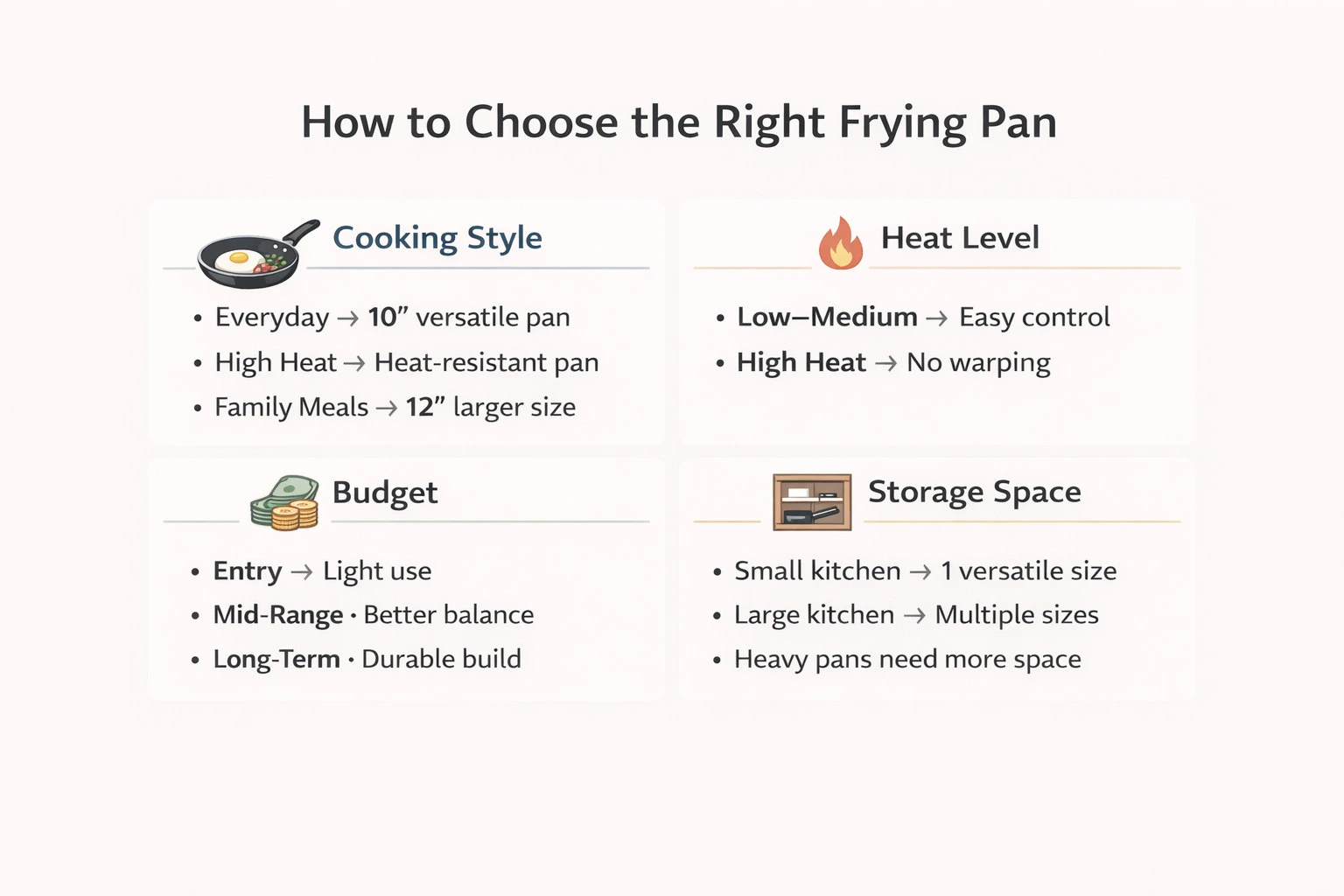
Choosing a frying pan is not about buying the most expensive option. It’s about selecting a pan that fits how you cook, how much heat you use, your budget, and your kitchen space.
Instead of focusing only on material, use this simple decision framework.
Based on Cooking Style
Start with what you cook most often.
- Everyday home cooking: If you cook eggs, vegetables, chicken, or simple one-pan meals, a versatile 10-inch pan is usually sufficient. Ease of cleaning and balanced heat control matter most.
- High-heat cooking and searing: If you frequently sear steaks or cook at high temperatures, choose a pan that handles strong heat without damage.
- Batch cooking or family meals: If you cook for multiple people, prioritize a larger diameter and good heat stability.
Match the pan to your most common meals—not occasional recipes.
Based on Heat Level
Different cooking habits require different heat tolerance.
- If you mostly cook at low to medium heat, surface control and easy cleanup may matter more than extreme durability.
- If you regularly cook at high heat, choose a pan that can handle sustained temperatures without warping.
Avoid using very high heat unless necessary. Most foods cook evenly at medium heat when the pan is properly preheated.
Based on Budget
Budget affects construction quality, but higher price does not automatically mean better results.
- Entry-level: Suitable for light cooking or occasional use.
- Mid-range: Often provides better heat distribution and longer lifespan.
- Long-term investment: Best for frequent cooks who want durability and consistent performance.
Focus on build quality and base construction rather than marketing claims.
Based on Storage Space
Kitchen space is often overlooked.
- Small kitchens benefit from one versatile size instead of multiple specialty pans.
- Stackable designs help save cabinet space.
- Larger kitchens can accommodate both medium and large sizes for flexibility.
Weight also matters. Heavier pans may offer heat stability but require more storage space and handling effort.
Frying Pan Safety Considerations
Most modern frying pans are safe when used properly. Safety issues usually come from overheating, surface damage, or using a pan beyond its intended limits.
Is Nonstick Safe?
Modern nonstick frying pans typically use PTFE-based coatings. When used within recommended temperature ranges, they are considered safe for normal cooking.
Important guidelines:
- Most nonstick pans are PFOA-free.
- Safe for low to medium heat cooking.
- Not designed for prolonged high-heat searing.
Safe Temperature Ranges
Each frying pan has a heat limit.
- Nonstick pans are usually safe up to about 400–500°F (check manufacturer guidance).
- Stainless steel and cast iron can tolerate higher temperatures.
Avoid Overheating
Overheating can:
- Damage nonstick coatings
- Cause warping
- Shorten pan lifespan
To reduce risk:
- Do not preheat an empty nonstick pan for long periods.
- Match pan size to burner size.
- Avoid sudden temperature shocks (such as placing a hot pan under cold water).
Stable, controlled heat improves both safety and cooking performance.
When the Coating Peels
If a nonstick surface begins to peel, flake, or bubble:
- Stop using the pan.
- Replace it rather than continuing to cook with a damaged surface.
Minor surface discoloration is usually cosmetic. Peeling or exposed base material is a sign the pan has reached the end of its useful life.
Used correctly and replaced when worn, frying pans remain a safe and reliable tool in everyday kitchens.
How Long Does a Frying Pan Last?
The lifespan of a frying pan depends mainly on its material, how often it’s used, and how well it’s maintained. Some pans are designed for convenience and short-term use. Others can last for decades.
Typical Lifespan by Material
- Nonstick Frying Pans: Most nonstick pans last about 2–5 years. The coating gradually wears down, especially if exposed to high heat or metal utensils. Once food begins sticking consistently or the surface flakes, it’s time to replace the pan.
- Stainless Steel Frying Pans: A well-made stainless steel pan can last 10 years or more, often much longer. Because it has no coating to wear off, its lifespan depends mainly on structural condition rather than surface performance.
- Cast Iron Skillets: Cast iron can last decades and is often passed down through generations. Even if the surface rusts, it can usually be restored through cleaning and re-seasoning.
Carbon steel pans have a similar long-term durability when properly maintained.
Signs Your Frying Pan Needs Replacement
Regardless of material, look for these warning signs:
- Peeling or flaking nonstick coating
- Deep warping that causes uneven heating
- Loose or unstable handles
- Severe rust that cannot be removed
- Persistent sticking despite proper use
For coated pans, surface damage is the main reason to replace. For uncoated pans like stainless steel or cast iron, structural integrity matters more than cosmetic scratches.
Care & Maintenance Tips
Proper care helps a frying pan last longer and cook more consistently. Clean correctly, avoid sudden temperature changes, store it carefully, and check handles regularly.
Cleaning by Material
Nonstick
- Hand wash with mild soap and a soft sponge
- Avoid metal utensils and abrasive scrubbers
- Let the pan cool before washing
Stainless Steel
- Use warm water and dish soap
- Soak if food is stuck
- Safe for stronger scrubbing (avoid deep scratching)
Cast Iron & Carbon Steel
- Rinse with minimal soap
- Dry immediately
- Apply a light layer of oil after cleaning
Cleaning correctly prevents surface damage and improves longevity.
Avoid Thermal Shock
Sudden temperature changes can warp a pan.
To prevent this:
- Do not place a hot pan under cold water
- Allow cookware to cool before washing
- Preheat gradually instead of using maximum heat immediately
A flat base ensures better heat contact and long-term stability.
Proper Storage
Improper storage can scratch surfaces or damage coatings.
- Stack pans with protective liners
- Avoid placing heavy pans directly on nonstick surfaces
- Hang pans if space allows
Good storage reduces wear over time.
Handle Inspection
Periodically check:
- Screws and rivets
- Handle stability
- Signs of loosening or cracking
Tighten loose screws if possible and replace the pan if handles become unsafe.
Simple maintenance habits help your frying pan perform safely and consistently for years.